Interior spaces often fail not because of poor taste but because of small, repeated home design mistakes that go unnoticed until a room feels flat. Lulu and Georgia‘s catalog, spanning upholstered seating, hand-knotted rugs, sculptural lighting, and textured accents, offers a useful lens for spotting these missteps. Looking closely at specific collections reveals what separates a considered room from one that simply has furniture in it.
Thinking All Upholstered Furniture Works the Same Way: The Portola and Shaw Sectional Difference
A common assumption treats sofas as interchangeable boxes of cushioning, as if silhouette and fabric choice were secondary details. The Portola Pleated Sofa challenges that idea with a pleated skirt and slope-arm construction that reads as transitional rather than strictly modern. Lulu and Georgia also offers the Shaw Corner Sectional, built with an undulating silhouette and a spacious seat that suits a different kind of room entirely.
Shaw comes in a wide selection of bespoke upholstery options, including Chambray Crypton Nomad and Blush Performance Velvet, with welting as a finishing detail. That range of fabric and construction choices means two sectionals from the same brand can serve opposite design goals. Treating all upholstered seating as one category is among the more common mistakes, since arm shape, skirt detail, and fabric sheen all change how a piece reads in a room.
Believing Rugs Are Just Floor Coverings: Understanding Hand-Knotted Wool Like the Heritage Collection
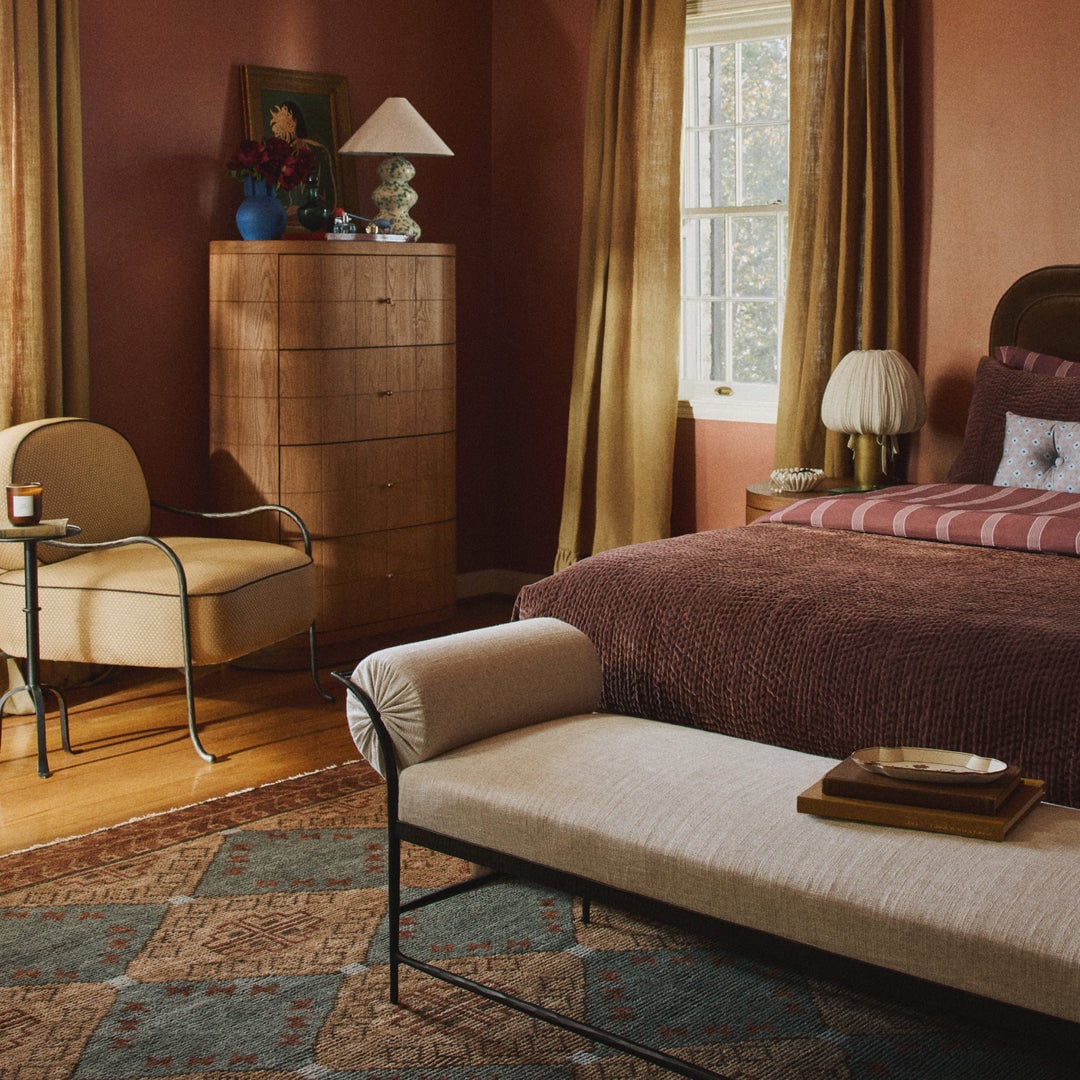
Rugs are frequently chosen last and treated as filler rather than as a structural design element. Within the Lulu and Georgia rug assortment, the Heritage Hand-Knotted Wool Rug, made from 100% wool, is constructed with a solid design and fringe detailing that gives it an heirloom quality. Because it is hand-knotted rather than machine-made, it carries a texture and durability that a flat printed rug cannot replicate.
That construction also means the rug can fold into a changing aesthetic rather than needing replacement every time a room is refreshed. Overlooking that flexibility is one of the quieter home design mistakes homeowners make when they treat a rug as disposable rather than foundational.
Overlooking Lighting as a Design Statement: The Jordan Chandelier and Jordan Lamp Range
Lighting is often selected purely for brightness, with little thought given to how a fixture looks when switched off. The Jordan Chandelier, available in a Poiret and Antique Bronze finish at 52 inches in diameter, is sized and finished to function as a focal point rather than a utility fixture. Its scale alone signals that lighting can anchor a room the way a piece of furniture does.
The companion Jordan Table Lamp carries the same design sensibility into a smaller format, with a rounded metal base and a pleated shade featuring a floral print. Pairing a statement chandelier with a coordinating lamp shows how a single design language can repeat across a room at different scales. Ignoring that opportunity, and defaulting to purely functional fixtures, is a missed chance that shows up repeatedly among home design mistakes.
Treating Accent Pieces as Afterthoughts: Why Velvet Pillows and Decorative Accessories Matter

Accent pieces are often the last items added to a room and the first ones skipped when a budget tightens. The pillow offerings found at Lulu and Georgia, including the Charlotte Velvet Pillow, the Sabine Velvet Bolster Pillow, and the Monroe Velvet Round Pillow, demonstrate how texture and shape variation can layer into a cohesive finish. These pieces are described as additions that work across a living room sofa, a dining bench, or a bedding arrangement, which suggests a deliberate role rather than a decorative afterthought.
Decorative objects follow the same logic. The Darcia Vase, with its ruffled stoneware form and reactive glaze, is built to add sculptural interest whether filled or left empty. Skipping this layer entirely, or adding it without considering material contrast, counts among the more avoidable mistakes in an otherwise well-planned room.
- Fabric durability is often assumed to be uniform across upholstery, even though performance textiles and standard velvets behave differently under daily use.
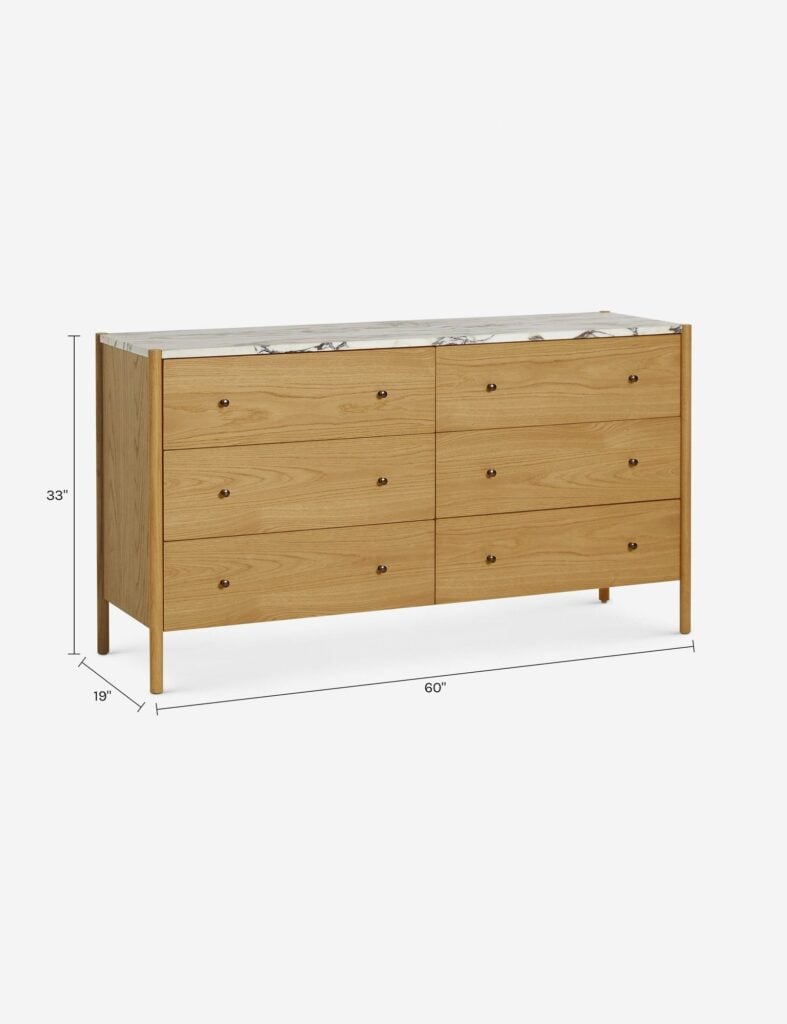
- Storage solutions are sometimes treated as purely functional, overlooking how a piece like the Philana Dresser integrates six drawers into a design with a wood frame and marble top.
- Transitional styling is frequently confused with strictly modern styling, even though pieces like the Portola Pleated Sofa are built specifically to bridge the two.
- Material quality is sometimes judged by appearance alone, rather than by construction details such as hand-knotting or solid wood framing.
- Textural contrast is often skipped in favor of matching finishes, even though pairing velvet, wool, and wood is what gives a room a layered, considered look.
Assuming Bedroom Furniture Can’t Be Sculptural: The Adara Bed and Platform Bed Design Philosophy

Bedroom furniture is often chosen for comfort alone, with headboard shape treated as a minor detail. The Adara Bed features a subtle winged headboard and trim lines, built as an upholstered frame meant to bring a tailored, bespoke touch to a bedroom. Its design shows that a headboard can carry as much visual weight as a sofa arm or a chair back.
The range at Lulu and Georgia also includes the Nabiha Platform Bed, with a streamlined, low, rounded headboard available across a wide range of fabrics and tones. Placing these two beds side by side shows that sculptural and minimal are not opposites within the same collection. Assuming a bed frame has to default to a plain rectangle is one of the simpler home design mistakes to correct once alternatives like these are visible.
Ignoring Fabric Performance: Why Crypton and Performance Velvet Change the Upholstery Equation
Fabric choice is often made on color and texture alone, without considering how a household actually uses a room. The Shaw Corner Sectional is offered in Chambray Crypton Nomad as well as Blush Performance Velvet, giving a household two different performance profiles within the same silhouette. The Carson Bench, upholstered in Mineral Performance Velvet, applies the same performance-fabric logic to a smaller seating piece meant for an entryway or the foot of a bed.
These fabric options matter because a performance textile and a decorative-only fabric are not interchangeable choices, even when the design and silhouette look identical. Overlooking that distinction is a recurring thread running through many home design mistakes, since a beautiful piece can underperform if the fabric underneath was not matched to its daily role. Considering fabric performance alongside silhouette, rather than after it, closes one of the last gaps between a styled room and a livable one.
Across sofas, rugs, lighting, bedroom furniture, and fabric choices, the pattern is consistent. Good design asks each element to do more than one job at once.