Glueless wigs promise a faster, adhesive-free way to wear human hair, but many first-time buyers treat them as a no-effort solution. That assumption is behind most of the common glueless wig mistakes seen in returns and complaints. Understanding what the category actually requires, and what it does not, separates a flawless install from a frustrating one.
Misunderstanding Glueless Installation: It Still Requires Prep Work
A glueless wig removes the need for adhesive, but it does not remove the need for preparation. Hair still needs to be flattened, braided, or laid properly under a cap for the unit to sit securely. Skipping this step is one of the most frequent glueless wig mistakes, and it usually shows up as gapping at the hairline or slipping throughout the day.
Sunber Hair describes its glueless lines as convenient because the lace is already cut and the hairline already plucked, not because setup disappears entirely. Customers who expect to pull a wig straight from the box onto bare, unprepped hair often end up disappointed with the fit. A few extra minutes spent flattening and securing natural hair makes a measurable difference in how the unit sits.
Pre-Cut Lace Wigs Are Not Actually Plug-and-Play, Even With Air Cap Technology

Sunber Hair‘s pre-cut lace wigs, sold under the Air Wigs collection, come with a pre-plucked hairline and a lightweight, breathable air cap construction. The product listings call them beginner-friendly and quick to style, and that claim refers to the cutting, plucking, and layering work already finished before the wig ships. It does not mean the wearer can skip adjusting the fit, securing the combs, or checking the cap against the hairline.
That distinction matters because several glueless wig mistakes trace back to confusing a shortened prep time with zero prep time. A wig built for a quick finish still needs its straps tightened and its edges blended before it looks natural. Treating the pre-cut construction as the entire installation, rather than a head start on it, is where many wearers run into trouble.
The Drawstring and Elastic System: Why Improper Tensioning Ruins the Fit
Many Sunber Hair units, including styles listed with an Invisi Drawstring or an elastic drawstring, rely on an adjustable band at the nape to secure the fit. Pulling that drawstring too tight creates pressure points and can distort the cap shape over time. Leaving it too loose, on the other hand, allows the unit to shift during normal movement.
Correct tensioning is a balance that most instructions mention only briefly. The band should sit snugly against the head without pinching, and it typically needs rechecking after the first few wears as the elastic settles. Because this step is easy to rush, it remains one of the more overlooked glueless wig mistakes among both new and experienced wearers.
Neglecting Natural Hair Foundation Undermines the Entire Glueless Setup
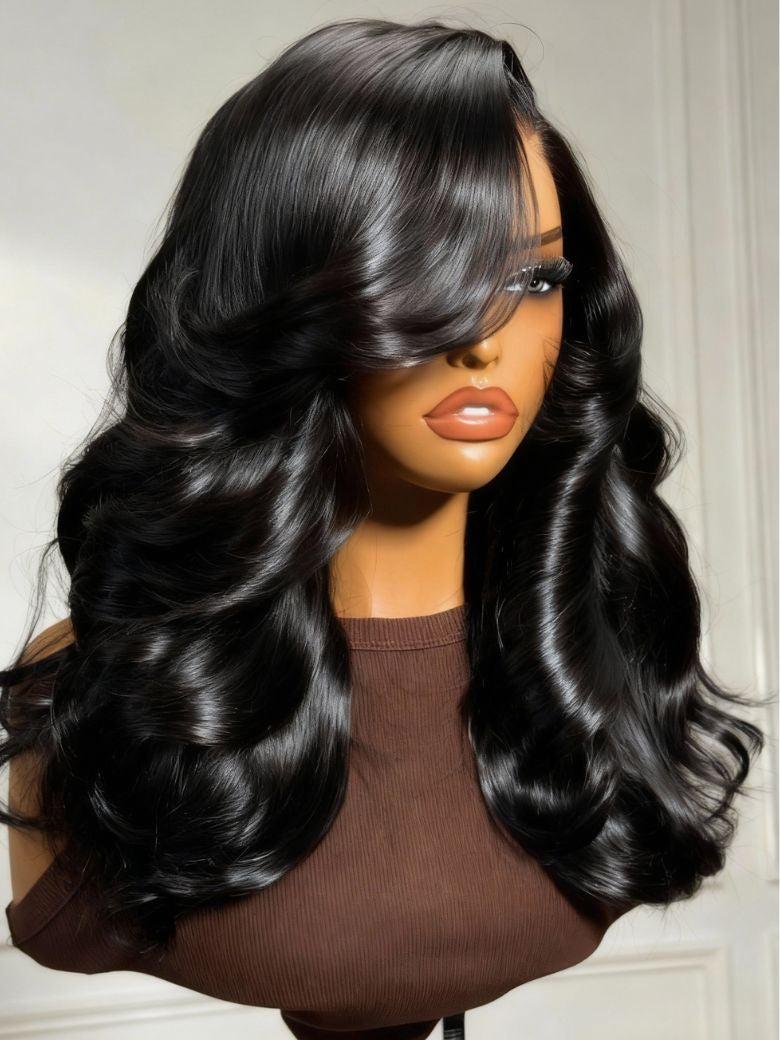
The condition of the hair underneath a glueless wig affects the outcome as much as the wig itself. Flat, well-moisturized hair gives a cap something stable to grip, while bulky braids or product buildup create uneven lumps under the lace. Skipping this foundation step is a quiet contributor to poor-looking installs that get blamed on the wig rather than the prep.
Scalp care also plays a role, since trapped sweat or oil can loosen the fit faster than expected. A clean, dry foundation helps a glueless cap hold its position through a full day of wear. This is less about any single brand and more about how the category of lace wigs behaves on different hair types.
Confusing High Density With Durability in Glueless Wigs

Sunber Hair lists several glueless styles at 180% and 200% density, terms that describe fullness rather than longevity. A higher density number means more hair strands are attached per unit of lace, which affects volume and styling options. It says nothing about how long the lace or the strands will hold up with repeated wear.
Assuming a denser wig is automatically sturdier is a common misstep. Density and durability are separate qualities, and treating them as one leads to unrealistic expectations about how a unit will age. A 180% density wig and a 200% density wig from the same collection can wear at a similar rate if cared for the same way.
Common Care Mistakes That Void the 30-Day Return Promise

Sunber Hair offers a 30-day return window, but that policy assumes the product comes back in a condition that reflects normal trial wear, not damage from mishandling. Cutting the lace incorrectly, applying unlisted styling products, or washing the unit improperly can all affect eligibility. These are avoidable errors, yet they appear often enough to be considered standard glueless wig mistakes.
Reading the return policy before installing or styling a new unit helps avoid this outcome entirely. Because the return window is time-limited, waiting too long to inspect the fit or raise a concern can also close the option. A careful first wear, paired with gentle maintenance, keeps the return path open if the fit or style does not work out.
- Flattening and securing natural hair under a wig cap before placing a glueless unit is a step many wearers skip.
- Expecting a pre-cut lace wig to require no adjustment at all overlooks the fitting work that still needs doing.
- Overtightening or undertightening the drawstring and elastic band leads to pressure points or slipping.
- Ignoring scalp cleanliness and moisture before installation creates an unstable base for the cap.
- Treating a higher density percentage as a sign of longer-lasting wear confuses two unrelated product qualities.
- Washing, cutting, or styling a new wig before checking the return policy can void eligibility for an exchange.
Avoiding these pitfalls rarely requires special skill, just attention to the steps that get rushed. A glueless wig still rewards the same patience any wig requires, even without the glue.