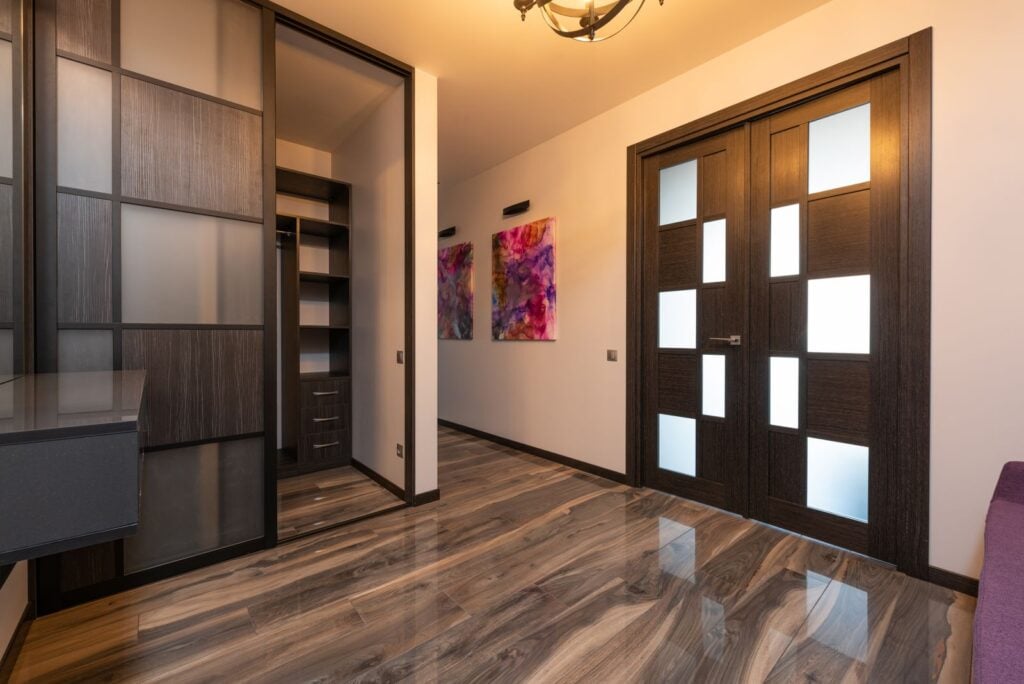
Sliding barn doors have moved well beyond rustic farmhouse interiors and into contemporary living spaces, offices, and closets. Wayfair carries a range of sliding barn doors alongside glass bifold systems, giving homeowners space-saving alternatives to traditional swinging doors. The lineup spans solid wood panels, slatted pine sets, and frosted glass bifold configurations, and the catalog presents both a natural-material look and a cleaner, more translucent profile for closets, laundry nooks, or partitions.
Doors: Wood Slat Panel and Slatted Pine Options
Among the solid wood choices, Wayfair lists a Wood Slat Panel Sliding Barn Door built as a solid wood interior door, a listing that pairs the panel name with an installation hardware kit on the product page. The slatted construction gives the panel a textured, linear look that reads as more tailored than a flat slab door. For anyone furnishing more than one opening, this single-panel format offers a straightforward starting point.
A second option is the Sliding Barn Door Set, which pairs two slatted pine wood doors with a black bypass hardware kit and ships as unassembled panels, meaning the buyer handles final assembly before the track goes up. Because the set arrives unassembled and uses a softer pine species, buyers take on more hands-on setup and lighter handling before the doors are track-ready. A bypass track lets the two doors slide past one another rather than stacking to one side, which is worth noting when measuring wall space.
Glass Bifold Barn Doors: 3-Lite and Frosted Panel Systems
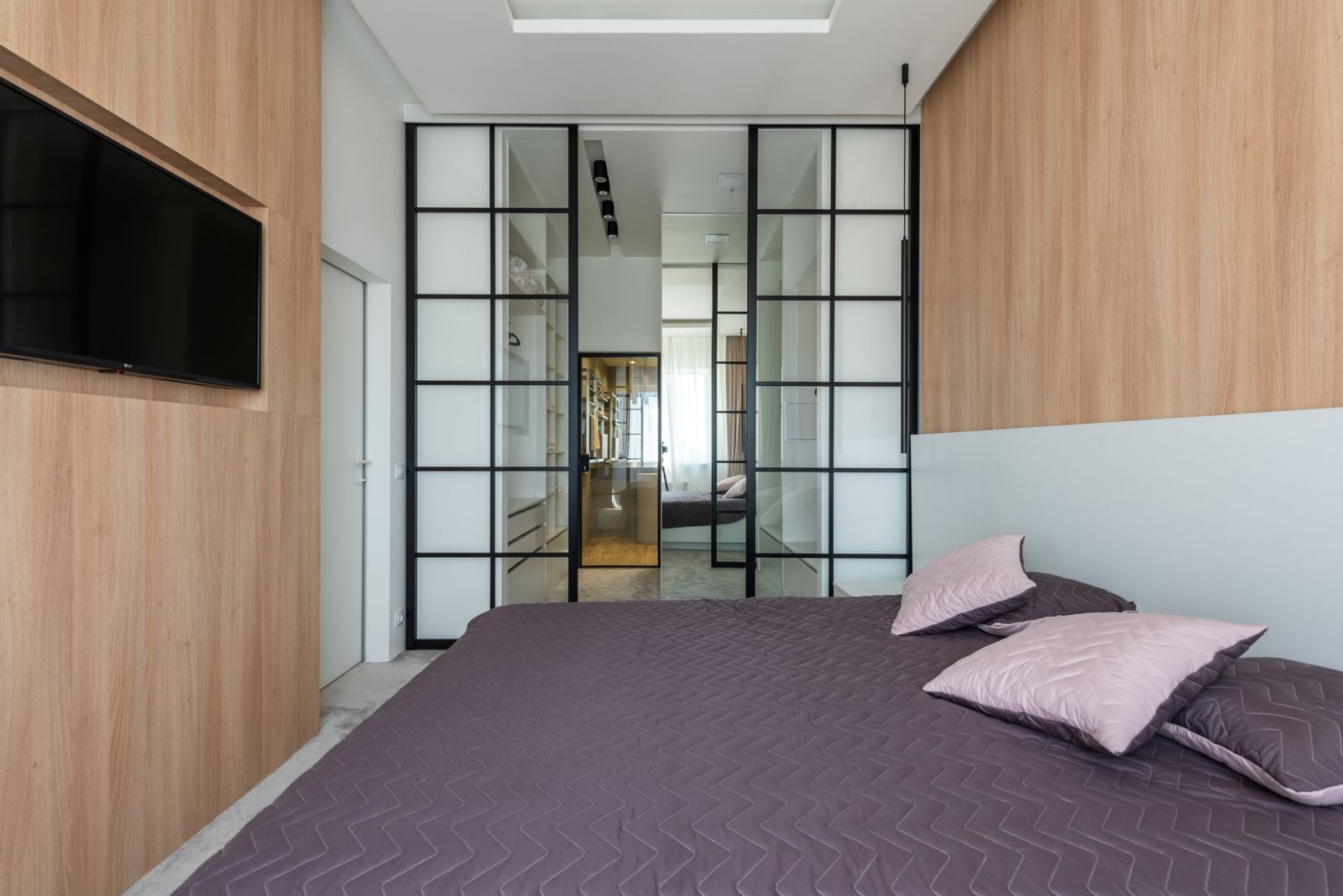
Wayfair also stocks glass-based folding systems for spaces where a full barn door slab is not practical. The 3-Lite 84″ Frosted Glass Bi-fold Barn Doors form a double-door set, with the listing combining three frosted glass lites per panel, a folding mechanism, and an installation hardware kit named on the same product page. Frosted glass allows light to pass through while obscuring a direct view, a useful trait for closets, laundry rooms, or home offices.
A separate listing, the Flexible Sliding Folding Closet Door, uses a white frosted glass 4-panel design with a full fold-back opening, giving each panel its own glass section rather than the three-lite split found on the 84″ bifold doors. This system folds completely to one side, which can free up more wall and doorway space than a standard bifold swing. Together, these two glass-based products show how sliding barn doors and folding bifold mechanisms sit within the same general category while serving different layouts.
Installation Hardware Kits and Assembly Requirements
Hardware is bundled differently across the range, which matters for anyone comparing listings on Wayfair. The dual-track hardware on the Flexible Sliding Folding Closet Door supports fold-back motion across four panels, a different working principle from the single-track bypass kit bundled with the slatted pine barn door set. Reviewing which hardware type appears on a given listing is a useful first step before measuring an opening.
Buyers comparing sliding barn doors against bifold glass systems can use these hardware differences to judge how much on-site setup a given product will need. Panels that arrive pre-finished generally ask less of the installer than a set shipped unassembled, such as the slatted pine door pair. Checking the listed hardware type and panel count together gives a clearer sense of what tools or time an installation may call for.
Contemporary Design Flexibility Across Door Styles
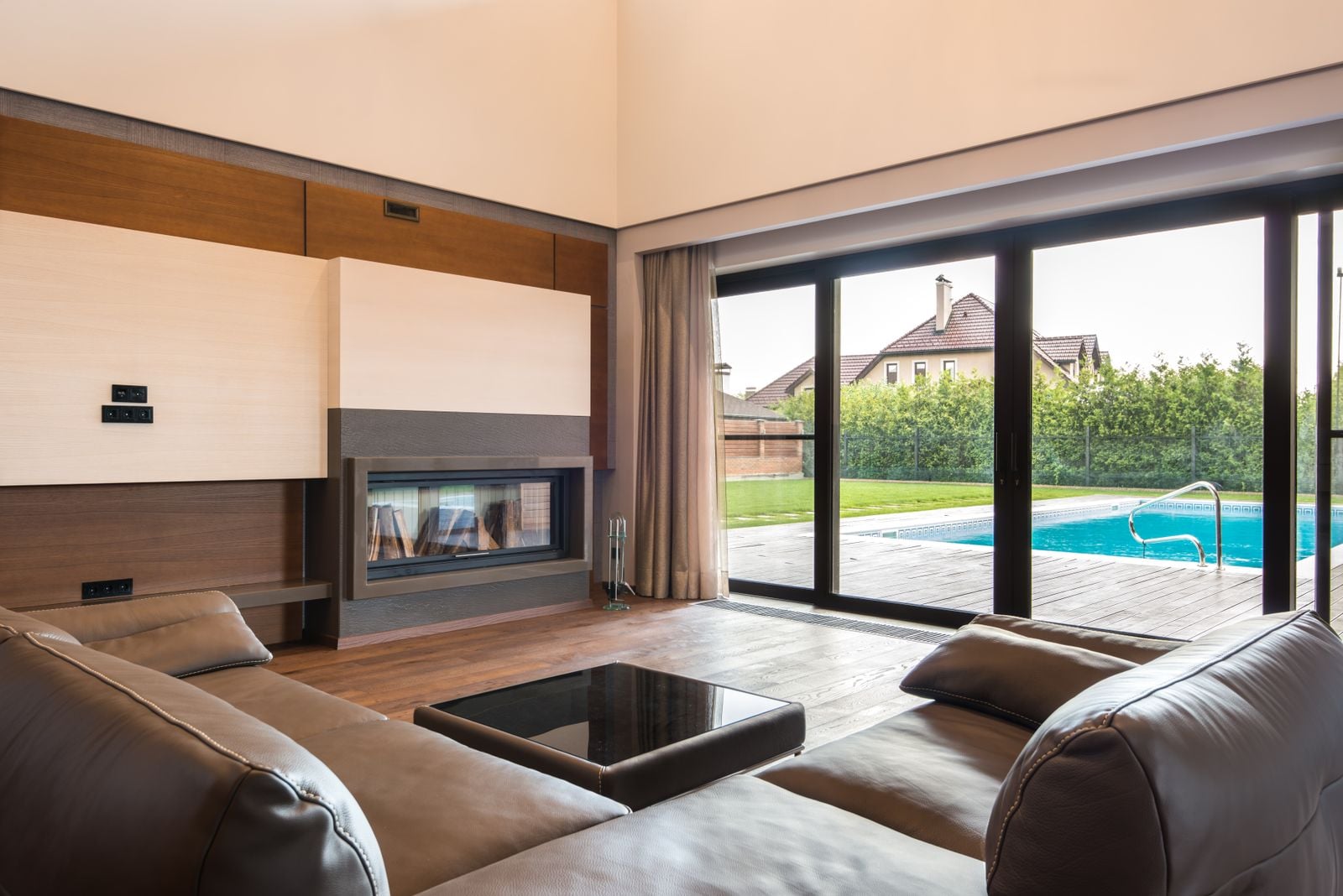
The range reflects two distinct design directions rather than a single aesthetic, and Wayfair presents both side by side rather than favoring one material over the other. Solid wood slat panels and slatted pine sets lean into a natural-material look, while frosted glass bifold panels bring a translucent alternative suited to closets, laundry nooks, or interior partitions. Choosing between the two often comes down to how much privacy or light diffusion a space calls for.
A solid wood sliding barn door blocks sight lines entirely, while a frosted glass bifold door lets daylight filter through without a clear view. This dual catalog structure gives shoppers two genuinely different door technologies labeled under the same general sliding and folding door category. Panel count and glass versus wood construction both factor into how a finished opening will look.
Durability and Material Considerations in Barn Door Selection
Material choice affects how a door feels and functions once installed. Solid wood panels, like the Wood Slat Panel door, are described specifically as solid wood interior doors, which sets them apart from veneer or composite alternatives. Slatted pine doors use a softer wood species than the solid wood slab option, a distinction worth noting when comparing panel weight during mounting.
Glass bifold systems introduce a different set of considerations, since frosted glass panels combine a rigid frame with glass lites rather than a single wood slab. The 3-lite configuration on the 84″ bifold doors splits each panel into three glass sections, a sectioned layout distinct from the single-pane-per-panel approach on heavier wood slabs. These structural differences mean a shopper weighing sliding barn doors against bifold glass doors is really comparing solid-panel wood construction against sectioned glass-and-frame assemblies.
- The Wood Slat Panel Sliding Barn Door is a solid wood interior door listed alongside an installation hardware kit.
- The Sliding Barn Door Set includes two slatted pine wood doors paired with a black bypass hardware kit, shipped as unassembled panels.
- The 3-Lite 84″ Frosted Glass Bi-fold Barn Doors form a double-door set with three glass lites per panel and an installation hardware kit listed on the same page.
- The Flexible Sliding Folding Closet Door uses a white frosted glass 4-panel design with full fold-back opening and dual track hardware.
- Hardware configurations vary between bypass kits for barn-style doors and dual-track kits for folding bifold systems.
Choosing Between Barn and Bifold Formats
Deciding between a sliding barn door and a glass bifold system often comes down to the mechanism a space can accommodate. A bypass barn door needs wall space beside the opening for the panel to slide across, while a bifold door folds back on itself and needs less lateral clearance. Reviewing panel count, glass versus wood construction, and hardware type together gives a clearer picture of which format suits a given doorway.
Across both categories, sliding and folding doors are no longer a single uniform product. A solid wood slat panel can suit a living space, while a frosted glass bifold set can suit a closet, depending on how much privacy or light transfer the room calls for.